Friday, June 1, 2012

Racheal Banks Appointed Director of Health Sciences Development


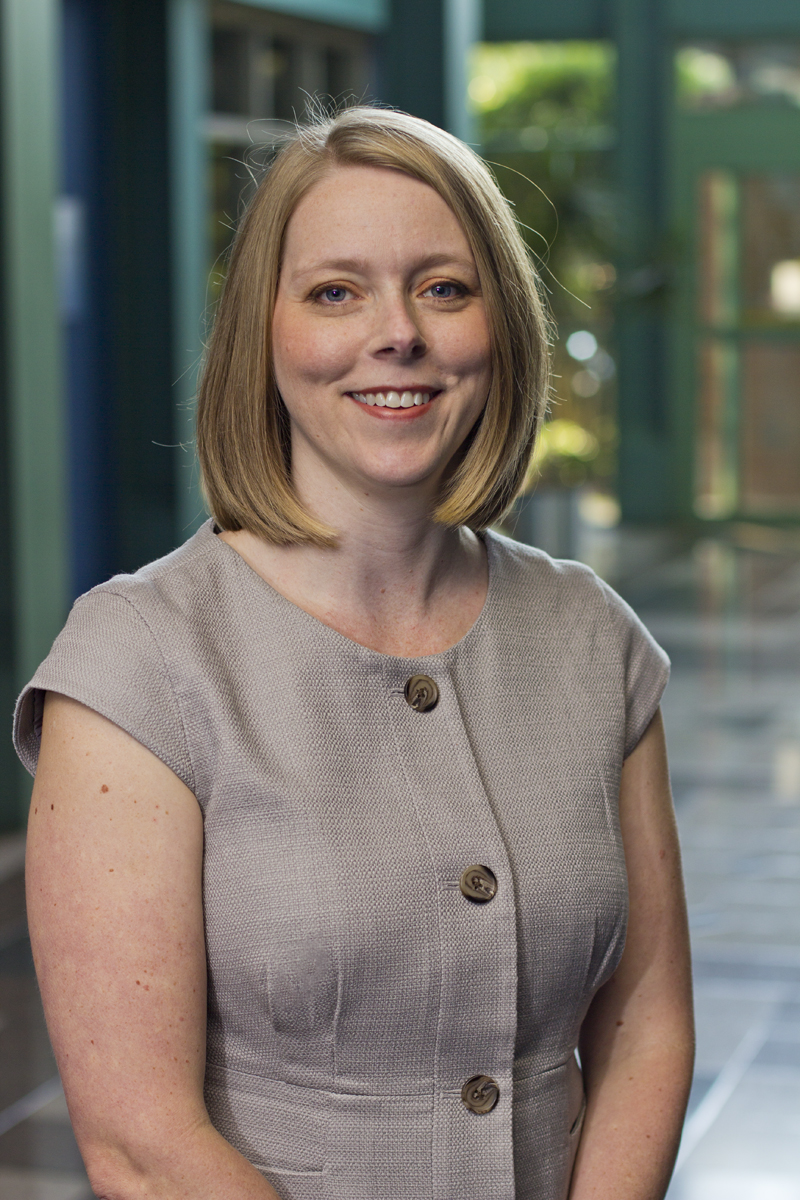
Racheal Banks was recently appointed director of health sciences development at the University of South Alabama. She will lead the development program for the USA College of Medicine, the USA College of Nursing and the USA College of Allied Health.

Prior to her appointment at USA, Banks served as director of development and alumni affairs at the University of Montevallo in Montevallo, Ala. While at the University of Montevallo, Banks served as the administrator of all alumni events and activities and managed all facets of university advancement including annual fund, major giving, scholarships, grants, planned giving, special events, stewardship and data management.

Banks earned a bachelor of science degree in psychology from the University of Montevallo in 1999 and a master of public administration in nonprofit management from Virginia Commonwealth University in Richmond, Va., in 2003. She is currently pursuing a doctor of philosophy degree in higher education administration from the University of Alabama.

From 2000-2001, Banks served as the national consultant for Chi Omega Fraternity in Memphis, Tenn. From 2001-2003, she served as a human resources associate at Honeywell International Inc. in Chester, Va.

From 2003-2004, Banks was assistant to the director of the office of corporate and foundation relations at Virginia Commonwealth University in Richmond, Va. She later served as assistant director of alumni relations at the University of Montevallo.

Banks has served on the Easter Seals’ team IMPACT Junior Board of Directors, Chi Omega Fraternity’s Alumnae Advisory Board, and the alumni task force and board of directors for the Higher Education Partnership, Alabama’s advocacy group for the state’s public universities.

USA Medical Center: Maintenance, Renovations

The University of South Alabama Medical Center is currently undergoing maintenance and renovation projects.

According to Steve Lancaster, food manager at the USA Medical Center, the hospital's cafeteria is being remodeled to focus on the eating area. "The walls have all been painted and new wall treatments have been applied," Lancaster said. "The entrance will change to provide a better flow for guests as well as for kitchen staff. The staff will now remove used trays through the new hallway being constructed where the old entrance was."

Lancaster said the floor is the last step in the remodel, and it will match what is in the hospital's administration hallway.


In addition, the hospital's exterior is being repainted. According to Lawrence Gardner, director of facilities management at the USA Medical Center, the expected completion of the project is Sept. 1, 2012.


Paul Taylor Receives William H. McDonald Print Journalism Award

Paul Taylor, associate director of public relations at the University of South Alabama College of Medicine, recently received the 2012 William H. McDonald Print Journalism Award at this year’s Medical Association of the State of Alabama awards program held in Birmingham, Ala.

The William H. McDonald Print Journalism Award is presented in recognition of outstanding efforts in the field of print journalism. The award was renamed in 2006 to honor MASA’s former Director of Communications William H. “Bill” McDonald.

Taylor has served the USA Health System for 24 years through several public relations capacities. In addition to working at the USA College of Medicine for the past 12 years, he has also worked at the USA Medical Center, USA Children’s and Women’s Hospital, and the USA Mitchell Cancer Institute.

Taylor is a graduate of USA where he majored in communication arts.

Dr. Brogdon Gives Keynote Speech in Switzerland

Dr. Gil Brogdon, University of South Alabama College of Medicine distinguished professor emeritus and former chair in the department of radiology, gave a keynote address in Zurich, Switzerland, at the International Society of Forensic Radiology and Imaging (ISFRI) meeting.

His speech, titled "A Personalized History of Forensic Radiology before Virtopsy," was given at the society’s first meeting held May 14-15, 2012.

“I was pleased and honored to be invited to participate in this first congress of ISFRI,” Dr. Brogdon said. “I have been involved in this field for almost half a century. At my age it is flattering and pleasing to still be recognized as a pioneer in the field and to still be desired as a speaker at international meetings.”

ISFRI was recently established by 145 Charter Members from 22 countries and five continents. Its purpose is to promote, develop and strengthen the field of forensic radiology and imaging through education, research and communication.

Dr. Brogdon was elected as the first honorary member of the ISFRI during the meeting in Switzerland.

“It is a personal honor, true, but I believe that any time a member of the institutional family receives favorable recognition it also casts a favorable light on the University and its opportunity for individual academic achievement,” Dr. Brogdon said.

Thursday, May 24, 2012

Two Physiologists Retire After More Than Three Decades at USA College of Medicine

The physiology department at the USA College of Medicine held a retirement reception for Dr. James Downey (right) and Dr. James Parker (center) on May 18.
Dr. James M. Downey, a world-renowned heart researcher, and Dr. James C. Parker, a scientist credited with improving respiratory care around the world, have both retired after more than three decades in the physiology department at the University of South Alabama College of Medicine.

According to Dr. Thomas Lincoln, chair of physiology at USA, Drs. Downey and Parker are among the best scientists USA can boast. “In addition, they are also two really fine people to be associated with,” he said.

Dr. Downey, an international leader in cardioprotection who has been with the physiology department since 1975, has made major contributions to our understanding of the mechanisms responsible for heart attacks and of the therapies to alleviate such injury. Much of the progress in this area is credited to his work.

Dr. Parker, who has been in the same department since 1977, has been an enormous contribution in the understanding of pulmonary function and ventilator-assisted therapy.

Both scientists have been funded by the National Institutes of Health for decades. They have trained dozens of scientists – both national and international – and have been involved in the department’s teaching efforts for many years. “As far as interests in cardiovascular and pulmonary research, it’s fair to say that those two areas are the strongest right now in our department because of them,” Dr. Lincoln said. “It will be part of their legacy at USA.”

Dr. Parker, who was involved in the establishment of the USA Center for Lung Biology, said he is most proud of his research on ventilator induced lung injury, which led to a large-scale clinical study involving seven medical centers using a reduced tidal volume to ventilate patients with acute respiratory distress syndrome (ARDS).

“This change in treatment significantly reduced the high mortality of some 40-50 percent and a protective ventilation strategy has been largely adopted as the standard of care worldwide,” Dr. Parker said. “This has resulted in thousands of lives being saved in intensive care units.”

Dr. Downey’s research focuses on protecting the ischemic heart, a problem that occurs when the heart muscle receives insufficient blood flow. His NIH grant is now in its 32nd year of continuous funding.

For his outstanding scientific achievements, Dr. Downey was presented the Peter Harris Distinguished Scientist Award by the International Society for Heart Research (ISHR) at their world congress in Kyoto, Japan, in 2010. He has been active in the governance of the ISHR since the 1980s and served as president of ISHR-International from 2001 to 2004.

Both Drs. Downey and Parker said they have enjoyed the congenial working relationship and collaboration with members of the physiology department, as well as many other departments both at the medical school and throughout the University. “The comradery of the school has been wonderful,” Dr. Downey said. “Everyone has been great to work with.”

Throughout the years, Dr. Downey said the department has been tremendously successful. “Our funding rate has always been impressive, and our small department has achieved a great international reputation.”

When Dr. Parker arrived at USA in 1977, only three medical classes had graduated. “Coming from a high-powered research physiology department at the University of Mississippi Medical School to empty labs was a challenge,” he said. “We had to not only obtain equipment and supplies but also obtain certification for the College of Medicine for use of radioisotopes and disposal of radioactive waste.”

Dr. Parker said the physiology faculty’s common background in cardiovascular physiology, as well as the strength in pulmonary circulation disorders, allowed the department to achieve a high degree of recognition for a relatively small medical school. “These strengths were complemented some years later by pharmacology professors with similar interests,” he said, “and it continues to this day.”

Dr. Downey, who doesn’t plan to quit research anytime soon, said his lab is still open and running. “Being a scientist is the best job in the world, and I would miss it terribly,” he said.

Both researchers are looking forward to devoting more time to their respective hobbies – Dr. Downey collects vintage motorcycles and Dr. Parker has been a competitive swimmer and sports enthusiast for many years. Their passion for research, however, will never end.

“I don’t think I’ve missed a single day in the office since I retired a month and a half ago,” Dr. Downey said. “They say the retirement police will get after me if I keep coming in like this,” he added.

The physiology department held a retirement reception for Drs. Downey and Parker on May 18, 2012, at the USA Faculty Club.

“They’ve both had a huge impact,” said Dr. Lincoln, who praised the researchers for their devotion to their work. “They deserve retirement. But with that retirement, we have two very large pairs of shoes to fill.”